
Remembering Elly Jansen OBE

Updated: Oct 29, 2025
Elly Jansen OBE, who has died aged 96, spent a lifetime dedicated to the field of mental health and the development of therapeutic communities globally.
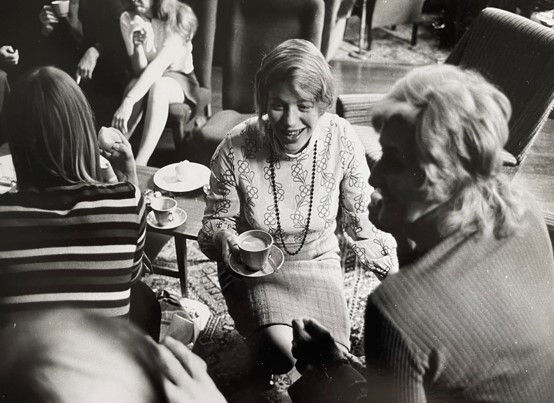
I first met Elly Jansen in 2017, soon after I began working with Community Housing and Therapy. She was already in her late 80s but still passionate about therapeutic communities and deeply interested in the work that CHT was currently doing; she had originally founded CHT (then called the Fellowship Charitable Foundation) some 25 years earlier but had parted company with the organisation shortly after its birth.
Elly was born in Holland in 1929, the sixth of nine children. Growing up during Nazi occupation and on the front line between German and Allied armies, she witnessed firsthand the impact of trauma. Elly remembered escaping to safety by crawling through a live battlefield with her siblings, mentally praying for God to keep them safe, an experience that profoundly affected her and gave her a deep belief in God.
After the war, Elly studied psychology, trained as a nurse, and worked with disturbed children before moving to England in 1955, initially to train as a missionary. It was at that time that Elly recognised the need for support for people recently discharged from mental hospitals to adjust to daily life, and decided to refocus her energy on helping people in this way instead.

Using the £100 she had for her theological studies, Elly rented a house in Richmond, where those leaving hospital could find community support. After placing a notice in a local hospital, she waited six weeks for her first applicant, marking the beginning of her first therapeutic community. Elly lived in the first community herself, alongside her residents. They ate together, shopped together, and made decisions that affected the community democratically as a group. Everyone was expected to play their part.
Its success led Elly to establish the Richmond Fellowship, through which she promoted the reintegration of mental health patients into mainstream society.
Elly’s approach balanced helping people to accept themselves as they are in order to build the inner strength to overcome their mental illness, while challenging them enough to promote growth and see their potential. What we might now call positive risk-taking.
While Elly became clear that there should be leadership from skilled, authentic and empathetic staff, she also emphasised the importance of staff and residents managing the community together. In Elly’s communities, there was a true sense of belonging. As the noted psychiatrist R.D. Laing once said, "She brought love into mental healthcare."

Under her leadership, Richmond Fellowship grew to include over 50 therapeutic communities in Britain. One of its early patrons was Princess Alexandra. Elly also founded Richmond Fellowship International, establishing therapeutic communities in Australia, New Zealand, India, Hong Kong and the United States, amongst others.
In that time, she published two seminal works, ‘The Therapeutic Community: Outside the Hospital’ and ‘Towards a Whole Society’, which outline her philosophy and the principles of her therapeutic approach.
In 1980, Elly was appointed an OBE in recognition of her contributions.
Describing her work she said: ‘It began with few preconceived ideas apart from the firm belief that people’s behaviour makes sense, and that the clue to the reconciliation and integration of the ‘sick’ individual with society lies neither in the authentication of extreme ‘sickness’ nor in identification with ‘sane’ society and its demands, but in establishing contact with and between the two’ (Elly Jansen, The Therapeutic Community).
Elly was Director of the Richmond Fellowship and the Richmond Fellowship International for just over 20 years. She spoke at multiple conferences around the world, as well as publishing her two books and various articles, and, both directly and through her rigorous therapeutic staff training at the Richmond Fellowship College, had an enormous influence on the therapeutic community movement and relational practice more generally.
As a manager and later Director at St Mungo’s, I was happy to employ many excellent staff who had experienced the Richmond Fellowship training, confident that they would be relational and able to work with the complex emotional and psychological challenges of the multiply disadvantaged rough sleepers we worked with there.
The time at the Richmond Fellowship was probably the high point of her career. I think that the combination of a somewhat difficult departure from the organisations she had created (like so many charismatic founders), and some deeply distressing events in her own personal life, took their toll on her energy and ability to focus so single-mindedly on her therapeutic work, although she went on to found several other charities (including what became Community Housing and Therapy (CHT)) and involved herself with the theory and practice of therapeutic communities for the rest of her life.
Elly and I met regularly ever since our first encounter back in 2017, and shared many conversations about therapeutic communities then and now, and her involvement in them, often over lunch and a glass of wine. We didn’t always agree, but we could hear each other’s views and argue it out; she was very present, quite direct in her opinions, full of insights into the dynamics of therapeutic communities, and fun to talk with. She had a sharp yet warm sense of humour that she kept to the end of her life. I was with her on her 93rd birthday, and I asked her how it felt to be 93; she smiled wryly and said, ‘I wouldn’t recommend it!'
A long life is a blessed thing, but also has its difficulties.
Elly outlived all her 8 siblings, and one of her daughters (she is survived by two), and saw both success and disappointment in her work. Her communities saved the lives of many people – I know some of them personally – but not all; that is the nature of working with extreme human distress, but it is also very difficult for everyone involved. Elly was deeply affected by tragedies in her working life, which in some ways mirrored tragedies in her personal life. Above all, she cared and showed her care.
Right up until the end, Elly still cared passionately about therapeutic communities and about research, and about making the work of therapeutic communities more widely known.
Elly's legacy.
At 92, she wasn’t able to take this forward herself any more, but it was her idea to create an Award for original research and articles on therapeutic communities; I suggested it bear her name and she agreed; and so the Elly Jansen Award was born. She generously donated a sum to enable the Award, and the CHT Board of Trustees agreed that CHT would administer it through a Committee to oversee the process and to make the recommendations for the Award. The Committee is composed of a number of people who have been committed to and active in the world of therapeutic communities and relational practice across the world; there are members from the UK, Italy, India, Japan and the USA, psychotherapists, academics, social workers and experts by experience, men and women, younger Committee members, and not-so-young-anymore members too. The Award is part of Elly’s legacy.
The house that Elly rented in 1959 for her first therapeutic community is now part of CHT, partly due to another generous grant from Elly, and is once again a flourishing therapeutic community; it also houses CHT’s training programme, which aspires to bring forward another generation of well-trained and committed therapeutic practitioners through our accredited Level 7 Diploma in Relational Practice in Mental Health. This too is part of Elly’s legacy, and young people in severe mental distress are still being supported in their endeavours to achieve more of their potential through the experience of living in a psychologically informed environment in a therapeutic community in the house where she first started.

However, I will end with some more words from Elly’s writings, this time talking about the international conferences that she initiated whilst at the Richmond Fellowship: ‘The purpose…was to enable those engaged in the work to extend their knowledge of developments and methods, and also to identify the particular contribution which the therapeutic community is able to make, in order to promote its full-scale development as part of mental health services’ (Jansen, 1980, p10).
She lived for that work, and, with the current crisis in mental health and the failure of medical models to provide resolution for people in severe and life-threatening emotional distress, it is work that remains as important today as it was then.
Jansen, E. (1980) The Therapeutic Community: Outside the Hospital. London: Croom Helm.
